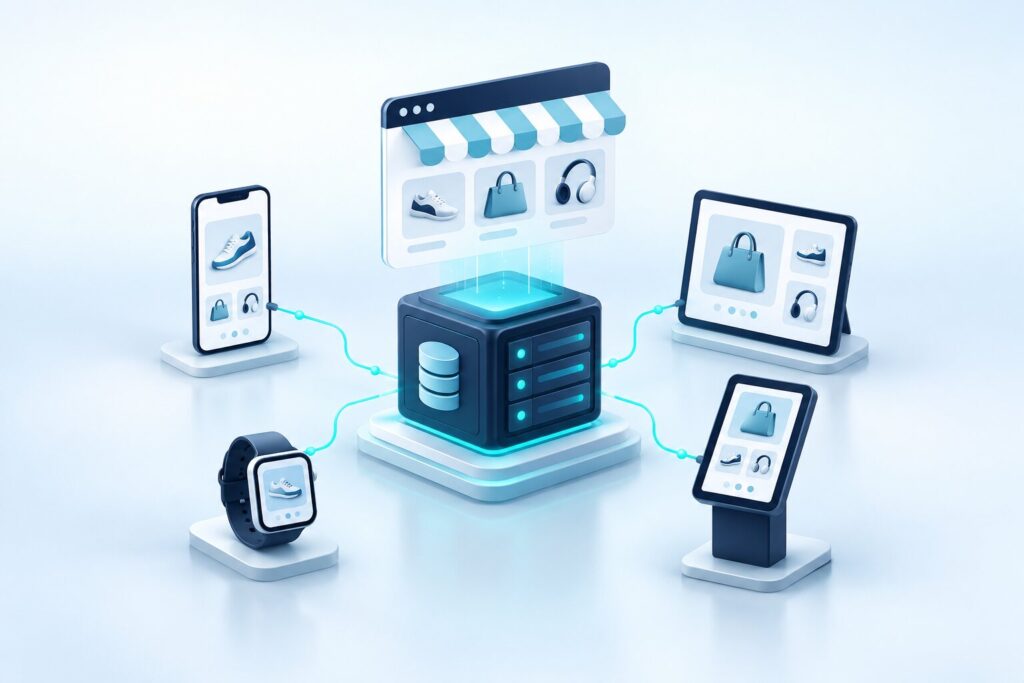
You genuinely need a headless Adobe Commerce architecture when your company has to display the same product data across multiple channels (online store, mobile app, IoT device) and a traditional, monolithic frontend cannot provide that flexibility. In every other case, introducing PWA Studio and a GraphQL-based architecture often turns out to be a waste of money. In our experience, most business leaders choose headless because it sounds technologically modern, not because a specific business need justifies it. In a significant share of cases, introducing a headless architecture significantly increases development complexity and the long-term maintenance burden, and it only pays off if the extra cost is offset by a real, measurable business benefit. This article uses concrete criteria to show when headless Adobe Commerce is justified, and when a simpler, traditional architecture is the better investment.
PWA Studio and GraphQL: what a headless architecture actually solves
PWA Studio is Adobe’s official framework for building headless frontends on top of Adobe Commerce. It is built on React, communicates with the backend via GraphQL, and replaces the classic Luma frontend with a full React application and a service worker for an app-like user experience. In our experience, PWA Studio can’t be considered obsolete (the latest version, 14.5.1, was released in May 2026), but Adobe’s strategic focus has shifted toward Edge Delivery Services, which means PWA Studio will remain maintained, but you shouldn’t expect significant new feature development. In the cases we have reviewed, the real value of a headless architecture showed up where the company needed to share user interface components with a native mobile app, or where the team already consisted of senior React developers.
When is a GraphQL-based, decoupled architecture really justified?
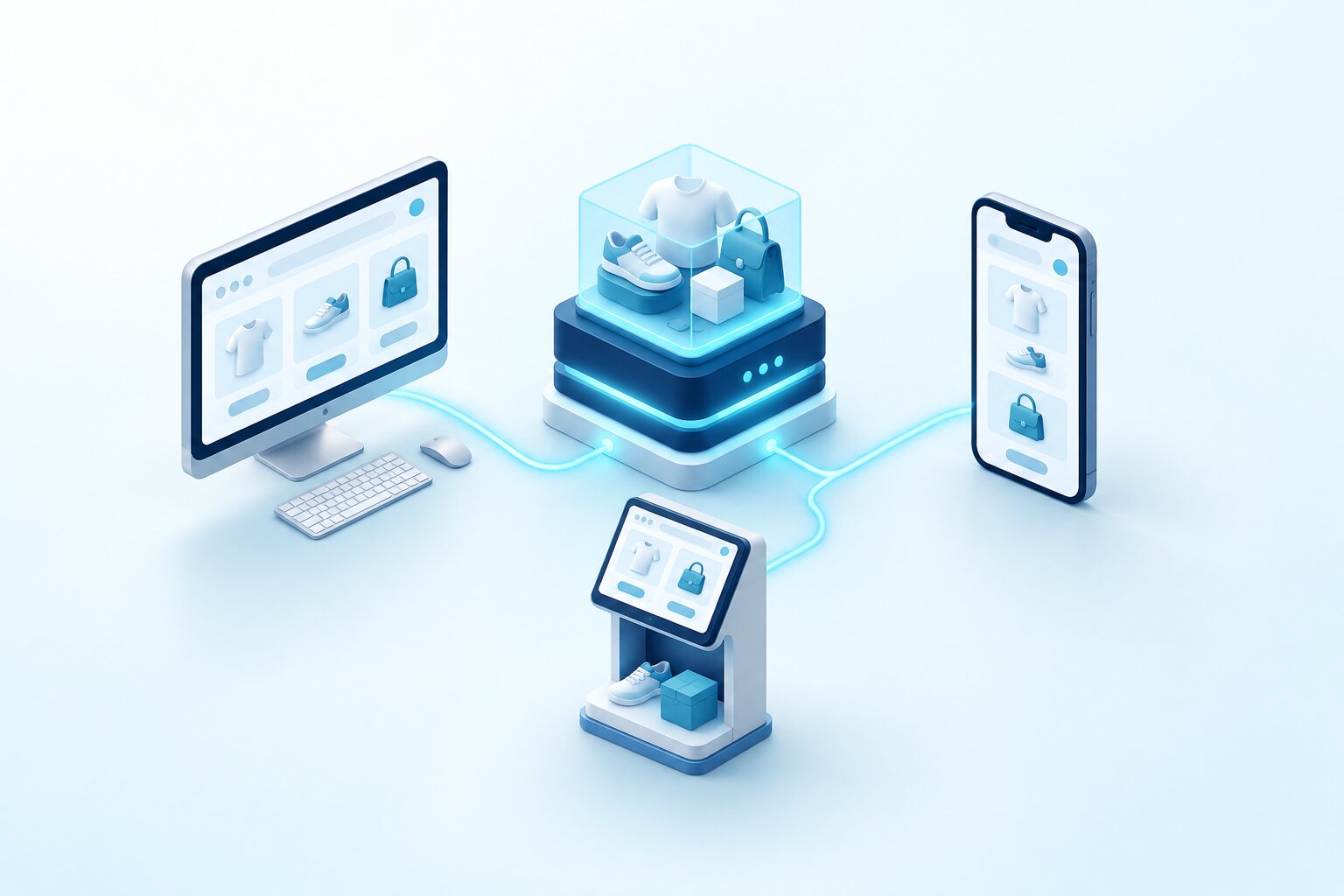
A GraphQL-based, decoupled architecture is justified when your company needs to serve the same product data on several channels that require different presentation, for example a native mobile app or a third-party digital interface alongside the online store, because then separating the backend from the frontend provides real flexibility. When the “more modern technology” argument isn’t enough on its own to justify headless: if your company has no concrete multichannel business need, because in that case the complexity of a headless architecture won’t pay off for a single, traditional online store.
Architectural complexity: what costs more with a headless solution
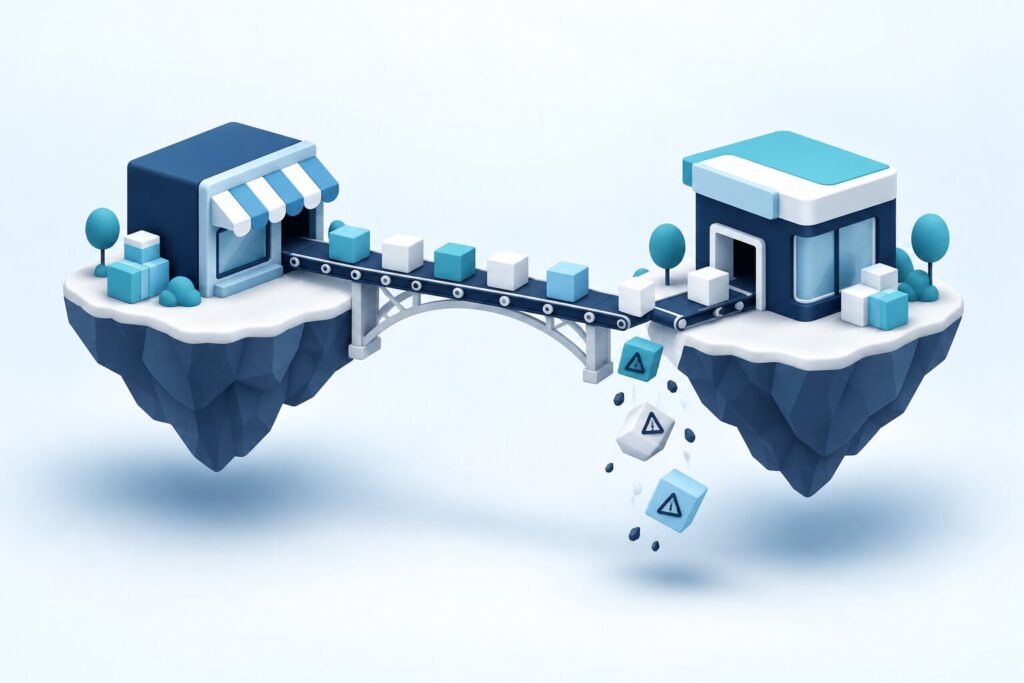
Architectural complexity is the most often underestimated aspect of headless Adobe Commerce, because introducing PWA Studio is not just a frontend swap: it requires an entirely new technology layer (a Node.js server for the frontend, separate hosting, CDN configuration and management of GraphQL endpoints) alongside the traditional PHP backend. In a significant share of cases, we have found that teams with no prior experience in React and GraphQL development significantly underestimated the actual time a headless project takes, because compared with the traditional, monolithic architecture of Magento store development, here two interdependent systems have to be maintained at the same time.
What specific technical burdens does a headless solution place on the team?
The specific technical burdens of a headless solution include configuring server-side rendering (SSR) properly so search engines can index the site, continuously operating the Node.js infrastructure, and maintaining the GraphQL schema with every backend change. Who shouldn’t introduce a headless architecture without in-house React experience: companies whose development team is mainly skilled in traditional PHP or server-side technologies, because for them a headless project significantly increases both development and long-term operational risk.
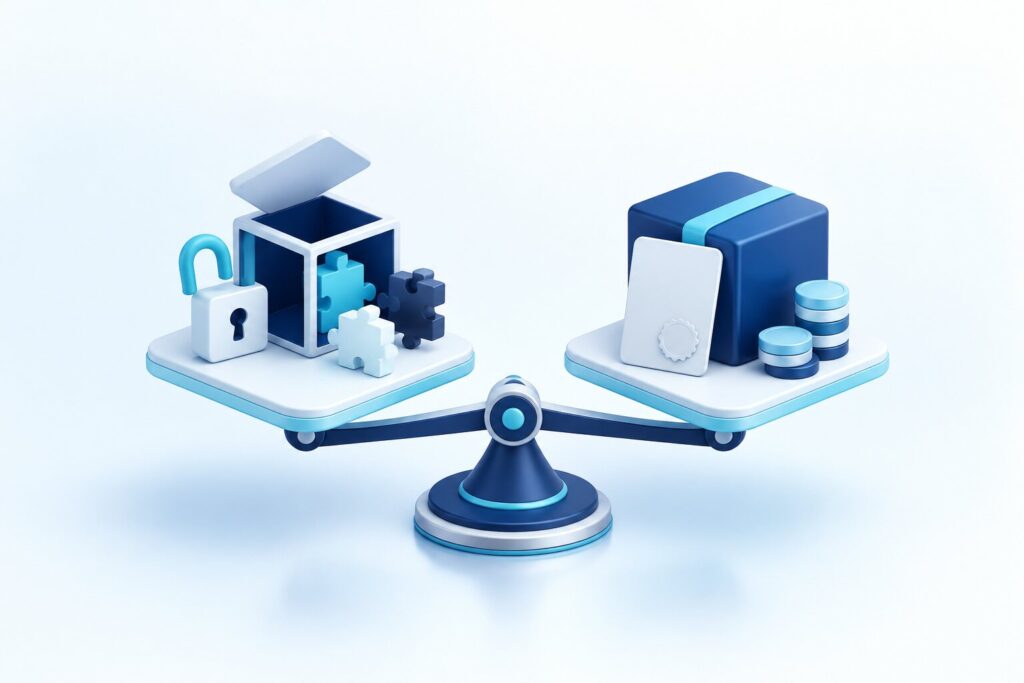
| Factor | Traditional (Hyvä/Luma) architecture | Headless (PWA Studio) architecture |
| Development complexity | Lower, unified PHP-based stack | Higher, React + Node.js + GraphQL |
| Infrastructure requirements | A single PHP backend | PHP backend plus a separate Node.js frontend |
| Sharing across channels | Limited | Excellent, can serve both a native app and the online store |
| Payback period | Shorter, simpler operations | Longer, only pays off with a real multichannel need |
ROI: when does a headless investment really pay off?
Return on investment (ROI) is at the heart of every headless decision, because the development cost of introducing PWA Studio typically far exceeds the cost of a traditional, Hyvä-based frontend, and this premium only pays off with concrete, measurable business benefits. In our experience, most clients achieve a positive return when the headless architecture allows a native mobile app and the online store to be developed together on a shared codebase, because then the initial extra cost is offset by the parallel development work avoided in the long run.
What specific signs show that a headless architecture won’t pay off?
Signs that a headless architecture won’t pay off include a project that serves only one online store, no plans for a native mobile app or other channel, and a team with no existing React experience, because in these cases the extra implementation and maintenance costs will almost certainly exceed the theoretical benefits of headless. Should you choose a headless architecture “just to be safe” for a simple, single-channel B2B online store? No, because in that case a well-optimized, Hyvä-based traditional architecture delivers the same or better Core Web Vitals results with considerably lower complexity and cost.
Before introducing headless Adobe Commerce, work through the following questions:
- Does your company have a concrete current or planned need to serve multiple channels (online store, native app, other interfaces) from a shared base?
- Does your development team or chosen partner have real React and GraphQL experience?
- Is the available time and budget sufficient to introduce a more complex architecture?
- How large is the expected conversion or business benefit that would offset the extra cost?
- Is there a simpler, traditional architecture (such as Hyvä) that would serve the same business goal with less complexity?
During the technical and business review before the decision, also weigh the following:
- The current system’s performance and Core Web Vitals scores on a traditional architecture.
- The long-term sustainability of Magento hosting and maintenance and the additional Node.js infrastructure required.
- The plan for implementing server-side rendering (SSR) to preserve search engine visibility.
- The team’s or partner’s long-term commitment to maintaining a headless architecture.
- The project’s actual business motivation: a real multichannel need or just a technology trend.
Edge Delivery Services and the future direction of the headless decision
The arrival of Edge Delivery Services (EDS) is an important factor to consider in every headless decision, because Adobe’s strategic focus is increasingly shifting toward this newer, document-based, edge computing architecture, while PWA Studio remains maintained but not a priority. In our experience, most business leaders don’t realize that PWA Studio and Edge Delivery Services represent two different philosophies, and for a headless project starting in 2026 it is worth considering which direction fits better with Adobe’s long-term roadmap, not just with current technical needs.
Why should Adobe’s long-term strategic direction factor into the decision?
Taking Adobe’s long-term strategic direction into account matters because, although PWA Studio isn’t being discontinued and still receives security fixes, the lack of significant new feature development means the framework will increasingly fall behind modern web development trends over time. When you shouldn’t decide based on the current state alone: if your company plans to maintain a headless architecture over several years, because then it is worth examining whether Edge Delivery Services or an alternative headless solution would better serve long-term maintainability.
Alternatives to PWA Studio: when it pays to look elsewhere
PWA Studio is not the only headless option on top of Adobe Commerce, and in a significant share of cases we have found that teams less experienced in React development do better with an alternative such as Vue Storefront (now called Alokai), or indeed the Hyvä Theme, which, although not a classic headless architecture, still delivers a significant performance advantage over the traditional Luma frontend with lower complexity.
How should you choose between PWA Studio and an alternative headless solution?
The primary factor in the choice is your team’s technology background and experience: if your developers are React-focused, PWA Studio or Vue Storefront can be a natural choice, while if the team is stronger in traditional, server-side PHP development, Hyvä offers a much lower barrier to entry with the same performance benefits. Should you base the decision solely on functional requirements, ignoring your team’s skills? No, because an architecture that is technically correct but unfamiliar to the team significantly increases maintenance risk and development costs in the long run.
A hybrid approach: when partial headless is the right choice
A hybrid approach is often a better compromise than a binary choice between a fully headless and a fully traditional architecture, because it lets your company introduce headless only on the interfaces where it adds real business value. In our experience, most clients do best when the main online store stays on a traditional, Hyvä-based architecture, while a separate headless layer is built only to serve the native mobile app or a special, campaign-style microsite.
In which cases does a hybrid, partially headless architecture work well?
A hybrid architecture works well when your company has a clearly separable headless need that applies only to certain interfaces, while the vast majority of the main online store’s traffic uses the traditional frontend. Who the hybrid approach is not for: companies where every channel needs to deliver the same deeply integrated user experience, because then maintaining two architectures can cause inconsistency and unnecessary complexity in the user experience.
Which architecture is the right choice: headless or traditional?
The right choice is never for a business leader to pick the solution that sounds more technologically advanced, but to introduce a headless Adobe Commerce architecture only when the company has a concrete, measurable business need to serve multiple channels (online store, native mobile app, other digital interfaces) from a shared base. In our experience, what most successful headless projects have in common is that before deciding, the team honestly assessed its own React and GraphQL experience and deliberately took on the extra burden of continuously maintaining the Node.js infrastructure and GraphQL schema, knowing that this complexity only pays off with a real multichannel benefit. In a significant share of cases, the projects that proved to be a waste of money were those where a headless architecture was introduced to serve just one online store, with no mobile app or other channel. In such cases, a well-optimized, Hyvä-based traditional architecture delivers the same or better Core Web Vitals results with considerably lower complexity and cost.
In our experience, a hybrid approach, where the main online store stays on a traditional architecture and only a separate layer is built headless to serve the native app or a special interface, is often a better compromise than a purely binary decision. Who shouldn’t introduce a headless architecture “just to be safe”: companies with no existing React experience on the team and no concrete plan to serve multiple channels, because for them the extra implementation and maintenance costs will almost certainly exceed the theoretical benefits of headless. Another important consideration is that Adobe’s strategic focus is increasingly shifting toward Edge Delivery Services, so for a headless project starting in 2026 and planned over several years, it is worth examining which direction better serves long-term maintainability. The right choice, then, is not following a technology trend, but an honest assessment that takes into account both your team’s skills and the real business need. This mindset decides whether headless Adobe Commerce becomes an investment or a waste of money.