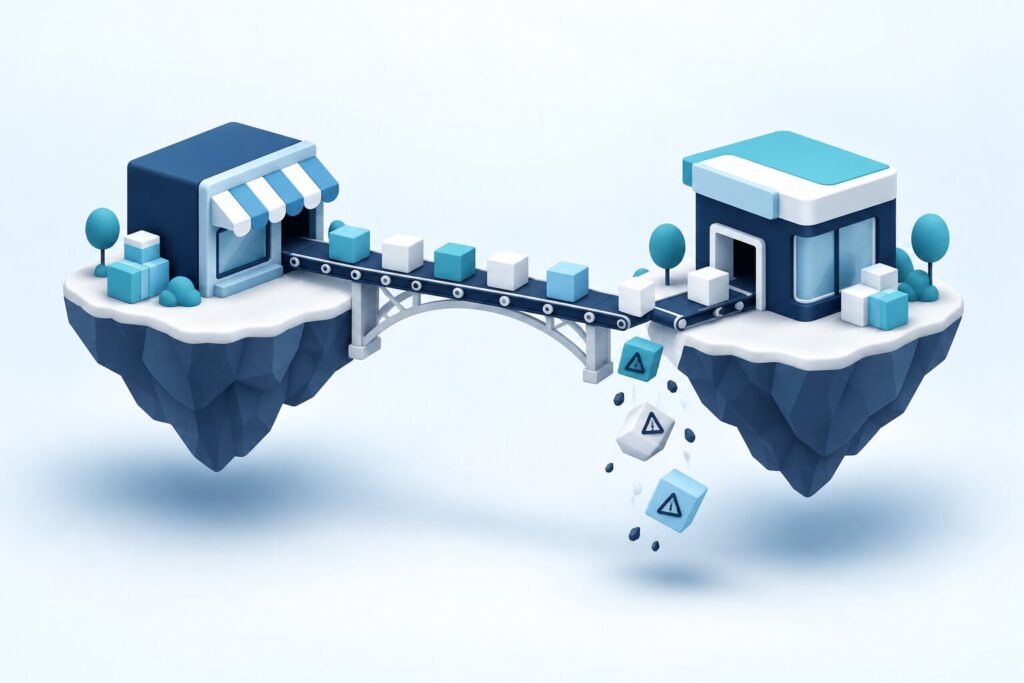
A greenfield project is one that starts from a completely clean slate, without any legacy systems or infrastructure. In e-commerce software, this is a particularly exciting opportunity, as it gives you the chance to use the latest technologies and solutions. In recent years, many clients have come to us after failing to choose the right partner and falling short of their goals during development. That is exactly why we don’t usually talk about a pure greenfield project: there is almost always an existing product database or CRM or ERP system that the new solution has to connect to and work with.
Defining the business concept and objectives
The first step is developing the business concept, which includes analyzing the project’s goals, target market and competitors. It is important to set clear, measurable goals that give the project direction. We like to work as true partners, because we are working together toward success. When we see the project’s business goals clearly, we can make the right technology decisions based on them. Our clients don’t always have an experienced e-commerce operations manager, and in such cases we usually assign a product owner to the project with greater availability. Our product owners have extensive experience on both the IT and business sides of e-commerce solutions, so they can ensure shared communication and effective planning, flag risks and proactively propose solutions to challenges.
For project scheduling and document version control, we use Atlassian’s professional, enterprise-grade solutions.


Project planning and resource assessment
Project planning involves creating a detailed schedule that includes the main milestones and deadlines. Resources also need to be assessed, including the specialists, technology tools and budget required. In this market segment especially, agile project delivery promises better results than development using a traditional waterfall model.
Designing the technology architecture
When designing the technology architecture, decisions have to be made about the platforms, programming languages and databases to use. It is important that the chosen technology is scalable and secure, and that it meets the business requirements.
Development and integration
In the development phase, the software developers start coding the system. In parallel, integration with other systems takes place, such as payment providers and logistics partners. The system must be tested continuously during development to ensure it works without errors.
Testing and quality assurance
In the testing phase, the software is checked using various testing methods, including functional, performance and security tests. The goal of quality assurance is to ensure the software meets the specified requirements and user expectations.


Launch and operation
At launch, the software is deployed to the production environment and live operation begins. It is important that the launch goes smoothly and that users receive proper support. During operation, the system’s performance and security must be monitored continuously, and updates and fixes must be applied when needed.
Ongoing development and maintenance
Even after the project is completed, continuous development and maintenance of the system remain important. This includes introducing new features, making changes based on user feedback and applying security updates.
Summary
Launching a greenfield e-commerce software project is a complex and challenging task that requires thorough planning and execution. From defining the business goals through designing the technology architecture to development and operation, every step is critical to successful delivery.